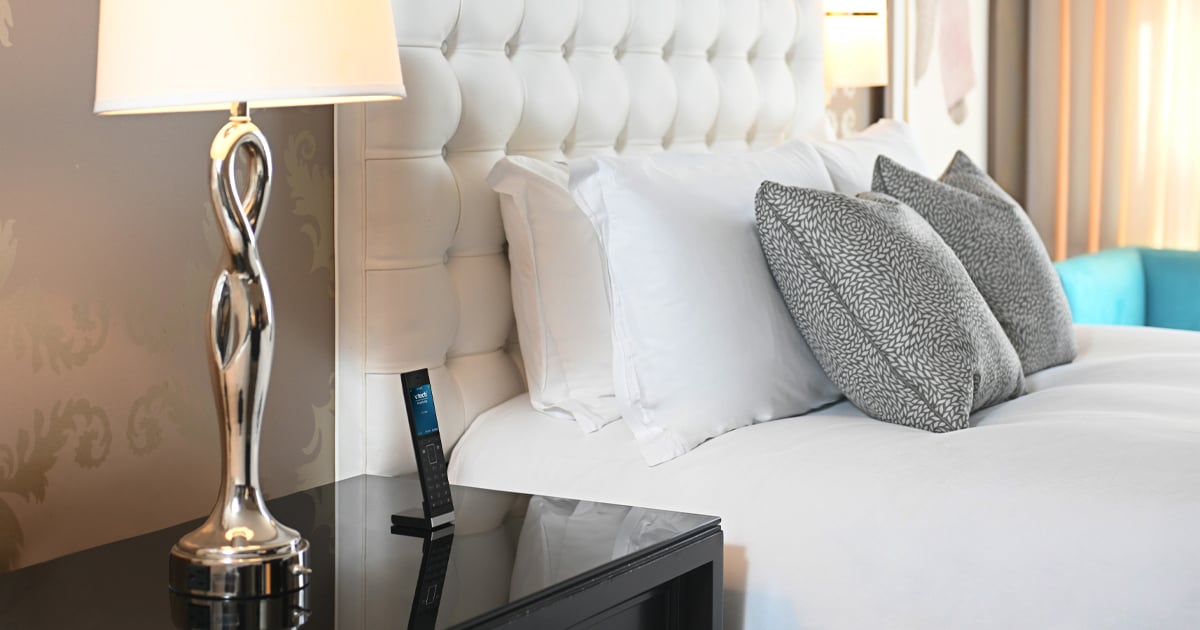
Guests may not notice every detail in a hotel room when everything works well.
But they definitely notice when it doesn’t.
A phone that is hard to use.
A thermostat that feels confusing.
Wi-Fi information that is impossible to find.
A room feature that looks outdated or inconsistent.
These may seem like small things, but in hospitality, small frustrations can quickly shape the entire guest experience.
The good news? Improving the guest room experience does not always require a major renovation. Sometimes, it starts with the basics.
 Make It Easy to Reach the Front Desk
Even with mobile apps and digital check-in, guests still need a simple way to reach hotel staff. That is where the guest room phone continues to matter.
Guests may use it to:
- Call the front desk
- Request housekeeping
- Report a maintenance issue
- Ask for extra towels
- Schedule a wake-up call
- Get help quickly in an emergency
The goal is simple: when a guest needs help, they should not have to search for it. A clean, reliable, clearly labeled phone can make the room feel more functional and guest friendly.
 Balance Guest Comfort with Energy Control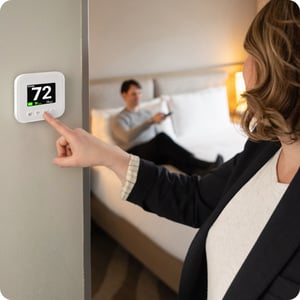
Room temperature matters to guests, but unrestricted thermostat use can create real challenges for hotels.
If guests can set temperatures too high or too low, it can lead to unnecessary energy use, higher utility costs, and extra strain on HVAC systems. At the same time, guests still expect the room to feel comfortable and easy to adjust.
That is why smart temperature control matters.
A well-designed hotel thermostat should help properties:
- Keep guests comfortable
- Set reasonable temperature limits
- Reduce unnecessary energy waste
- Support better HVAC performance
- Maintain consistency across rooms
The goal is not to give guests unlimited control. It is to give them a simple, comfortable experience within settings that make sense for the property. For hotel owners, that balance can make a big difference.
 Choose Technology That Feels Helpful
Hotel room technology should not feel like a puzzle. Guests do not want to “figure out” the room. They want things to work. The best in-room technology is simple, reliable, and intuitive. It supports the stay without getting in the way. That applies to phones, thermostats, charging stations, lighting, TVs, and any other room feature guests use directly.
Modern does not always mean complicated. In many cases, simple is better.
 Put Key Information Where Guests Can Find It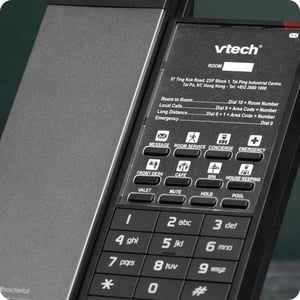
Guests should not have to guess how to connect to Wi-Fi, call housekeeping, or request maintenance. A few clear instructions can prevent a lot of confusion.
Hotels should make the most common information easy to find:
- Front desk extension
- Wi-Fi details
- Restaurant Info
- Housekeeping requests
- Breakfast hours
Keep it short. Keep it visible. Keep it useful. Too much information becomes clutter. Too little creates frustration.
 Create a Consistent Room Experience
Consistency matters. If every room has a different phone, different thermostat, or different setup, it can create problems for both guests and staff.
A consistent room setup helps:
- Guests know what to expect
- Staff answer questions faster
- Maintenance teams troubleshoot more easily
- Properties maintain a cleaner brand standard
For hotels, consistency is not just about appearance. It helps operations run more smoothly.
 Look at the Room Like a Guest
One of the easiest ways to improve the guest room experience is to walk into the room with fresh eyes.
Ask:
- Can I reach the front desk easily?
- Is the phone clean, working, and clearly labeled?
- Can I adjust the room temperature without confusion?
- Is Wi-Fi information easy to find?
- Do the room features feel current and well maintained?
- Would this room feel simple to use after a long travel day?
If the answer is no, that small detail may be worth fixing. A better guest experience does not always come from big changes. Sometimes, it comes from making the everyday room essentials easier, clearer, and more reliable.
Guest room phones, smart temperature control, clear instructions, and consistent room features may not always get attention, but they play an important role in how the stay feels. Because in hospitality, the little things are not really little.