---
title: "Evolving Trends in the Hospitality Hotel Industry: A Look into 2026"
description: Explore key hospitality trends for 2026, from energy-efficient smart thermostats to design-forward guest tech and sustainable hotel innovation.
image: https://blog.vtechhotelphones.com/hubfs/hero-evolving-trends-v5.jpg
---
- [Call us at 888-714-7385](tel:888-714-7385)
- [Log in](https://www.vtechhotelphones.com/customer/login)
- [Products](https://www.vtechhotelphones.com/#navi-subproduct)
- [Guest Room Phones](https://www.vtechhotelphones.com/products/search)
- [Thermostats](https://www.vtechhotelphones.com/products/search/keyword/thermostat)
- [Administrative Solutions](https://www.vtechhotelphones.com/administrative-solutions)
- [Mobile Staff Solutions](https://www.vtechhotelphones.com/mobile-staff-solutions)
- [Conference Solutions](https://www.vtechhotelphones.com/conference-solutions)
- [About Us](https://www.vtechhotelphones.com/#navi-subabout_us)
- [Why Vtech](https://www.vtechhotelphones.com/about/whyvtech)
- [Brochure / Videos / Images](https://www.vtechhotelphones.com/about/press/media)
- [Press Releases](https://www.vtechhotelphones.com/about/press/press-releases)
- [Contact Us](https://www.vtechhotelphones.com/#navi-subcontact_us)
- [Support](https://www.vtechhotelphones.com/support/contact-us)
- [Resources](https://www.vtechhotelphones.com/support/product-resources/resources)
- [Request Quote](https://www.vtechhotelphones.com/support/request_quote)
# Evolving Trends in the Hospitality Hotel Industry: A Look into 2026
Published by [VTech Hospitality](https://blog.vtechhotelphones.com/author/vtech-hospitality) on Feb 18, 2026 12:35:45 PM
The hospitality industry doesn’t move slowly anymore. Guest expectations are shifting fast, operational costs are rising, and technology is no longer a “nice to have.” As we step into 2026, hotels that adapt intelligently not just aggressively will win. Here’s what’s shaping the future.
## 1. Energy Efficiency Is No Longer Optional
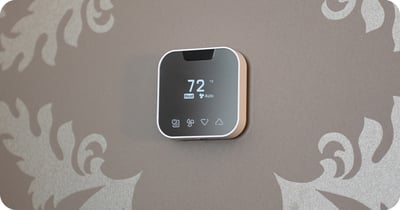Energy costs continue to pressure hotel margins. Owners are actively looking for ways to reduce HVAC consumption without compromising guest comfort.
Smart and wireless thermostats are becoming standard in renovations and new builds. Solutions like the [W960 E-Smart Wireless Thermostat](https://www.vtechhotelphones.com/pd/4677/W960-Space-Gray-E-Smart-W960-Wireless-Thermostat) from VTech Hospitality allow properties to reduce energy waste while keeping installation simple - no complex rewiring, no room downtime.
At the same time, wired solutions such as the [T961NN50 Universal Wired Thermostat](https://www.vtechhotelphones.com/pd/5034/T961NN50-T961NN50-Universal-Wired-Thermostat) offer reliable control for properties seeking a straightforward upgrade path.
**2026 takeaway:** Energy efficiency is a brand story now, not just an operations metric.
## 2. Contactless, Yet Human
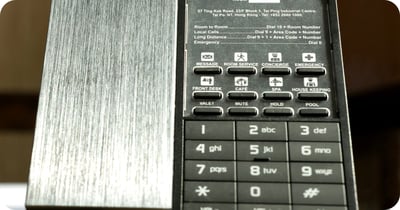Guests appreciate mobile check-in and digital keys. But they still want immediate access to staff when needed.
In-room communication devices are evolving to balance both. [Modern cordless and antibacterial phones](https://www.vtechhotelphones.com/products/search/category/hospitality-analog/subcategory/cordless-phones-and-accessories)provide a hygienic, clutter-free look while maintaining reliable voice connectivity with a critical touchpoint during emergencies or service requests.
The key shift isn’t removing human interaction. it’s making it seamless.
**2026 takeaway:** Technology should reduce friction, not remove reassurance.
## 3. Design-Forward Guestrooms
Guests notice aesthetics more than ever. Social media has turned hotel rooms into shareable experiences.
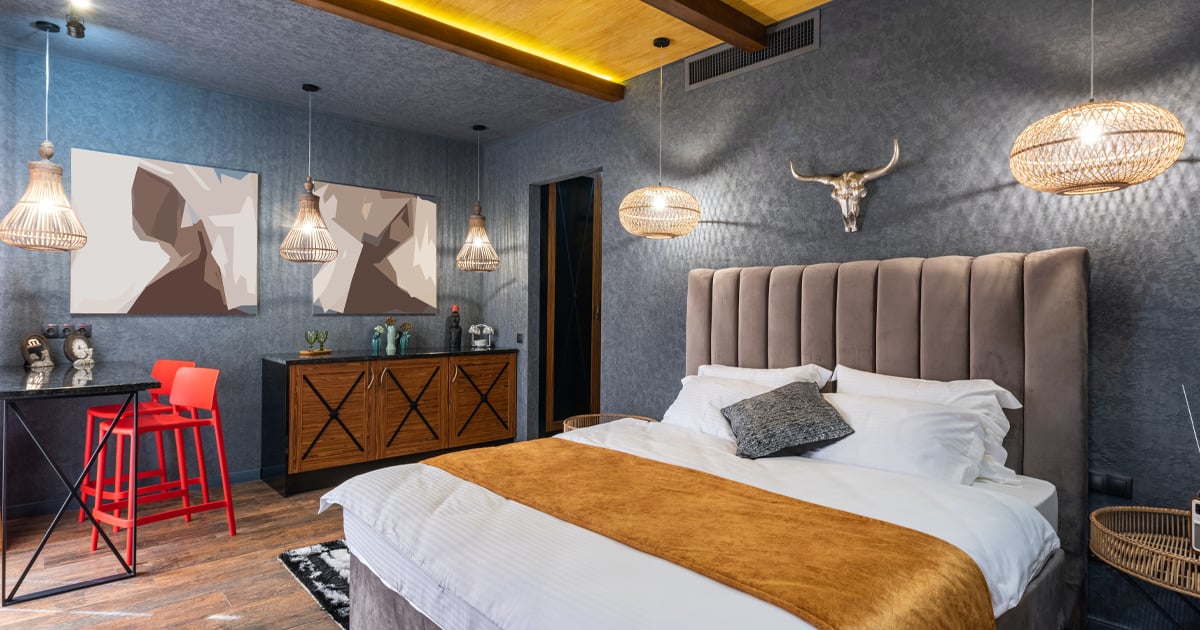
Hardware is expected to blend in with Matte finishes, minimal footprints, and customizable accents. Even functional items like thermostats and phones are now part of the visual language of the room.
Compact, modern devices, whether a space-gray wireless thermostat or a matte-black cordless phone should complement contemporary interior design instead of disrupting it.
**2026 takeaway:** Operational tools must align with the room’s design narrative.
**4. Health & Hygiene Remain Top of Mind**
Post-pandemic awareness hasn’t faded. Guests may not ask about antibacterial plastics, but they assume hygiene is built in.
Hospitality hardware increasingly incorporates antimicrobial materials to reduce [bacterial growth](https://www.vtechhotelphones.com/about/whyvtech) on high-touch surfaces. This quiet innovation enhances safety without adding visible complexity.
**2026 takeaway:** Hygiene features should be embedded, not advertised loudly.
**5. Sustainability as a Competitive Differentiator**
Sustainability is moving from compliance to competitive advantage. Corporate travel programs increasingly prioritize eco-conscious properties. Guests are also more aware of their environmental footprint.
Energy-saving HVAC controls, durable long-life hardware, and efficient device ecosystems all contribute to measurable impact.
The conversation in 2026 isn’t “Are you sustainable?” It’s “How measurable is your sustainability?”
# Final Thoughts
The hospitality industry in 2026 is defined by balance:
- Smart but simple
- Efficient but elegant
- Contactless but connected
- Sustainable but profitable
The hotels that thrive will integrate technology subtly into the guest experience, not overwhelm it.
Hospitality hardware providers like VTech Hospitality are part of this evolution, supporting properties with practical solutions that align with modern operational demands and guest expectations.
The future isn’t about more technology. It’s about smarter, quieter, better technology working in the background, so the guest experience shines in the foreground.
[Back to Blog](https://blog.vtechhotelphones.com)
- [Tweet](https://twitter.com/share)
## Related Articles
## [Choosing the Right Hotel Phones for Your Brand](https://blog.vtechhotelphones.com/choosing-the-right-hotel-phones-for-your-brand)
When it comes to outfitting your hotel, every detail matters—including the phones. Whether you're...
[Read More](https://blog.vtechhotelphones.com/choosing-the-right-hotel-phones-for-your-brand)
## [VTech Hotel Thermostats and the Future of Green Hospitality](https://blog.vtechhotelphones.com/vtech-hotel-thermostats-and-the-future-of-green-hospitality)
As the world continues to grapple with climate change, the hospitality industry is increasingly...
[Read More](https://blog.vtechhotelphones.com/vtech-hotel-thermostats-and-the-future-of-green-hospitality)
## [What guests need in a hotel room?](https://blog.vtechhotelphones.com/what-guests-need-in-a-hotel-room)
Apart from the timeless guest experience, guests tend to expect some technological freedom during...
[Read More](https://blog.vtechhotelphones.com/what-guests-need-in-a-hotel-room)
- [Guest Room Phones](https://www.vtechhotelphones.com/products/search)
- [Administrative Solutions](https://www.vtechhotelphones.com/administrative-solutions)
- [Mobile Staff Solutions](https://www.vtechhotelphones.com/mobile-staff-solutions)
- [Conference Solutions](https://www.vtechhotelphones.com/conference-solutions)
- [Why VTech](https://www.vtechhotelphones.com/about/whyvtech)
- [Support](https://www.vtechhotelphones.com/support/contact-us)
- [Resources](https://www.vtechhotelphones.com/support/product-resources/resources)
[](https://www.linkedin.com/showcase/vtech-hospitality)
[](https://www.youtube.com/channel/UC6Dn1i95cvdfUYMikBMq20w?view_as=subscriber)
[](https://www.linkedin.com/showcase/vtech-hospitality) [](https://www.youtube.com/channel/UC6Dn1i95cvdfUYMikBMq20w?view_as=subscriber)
[](https://www.linkedin.com/showcase/vtech-hospitality)
[](https://www.youtube.com/channel/UC6Dn1i95cvdfUYMikBMq20w?view_as=subscriber)
[](https://www.linkedin.com/showcase/vtech-hospitality) [](https://www.youtube.com/channel/UC6Dn1i95cvdfUYMikBMq20w?view_as=subscriber)
[888-714-7385](tel:888-714-7385)
[sales@vtechhotelphones.com](mailto:sales@vtechhotelphones.com)
[support@vtechhotelphones.com](mailto:support@vtechhotelphones.com)

[888-714-7385](tel:888-714-7385)

[sales@vtechhotelphones.com](mailto:sales@vtechhotelphones.com)
[support@vtechhotelphones.com](mailto:support@vtechhotelphones.com)
- [Support](https://www.vtechhotelphones.com/support)
- [Privacy Policy](https://www.vtechhotelphones.com/privacy-policy)
- [Cookie Policy](https://www.vtechhotelphones.com/cookie-policy)
- [Terms of Use](https://www.vtechhotelphones.com/terms-of-use)
- [Accessibility Statement](https://www.vtechhotelphones.com/accessibility)
[888-714-7385](tel:888-714-7385)
[sales@vtechhotelphones.com](mailto:sales@vtechhotelphones.com)
[support@vtechhotelphones.com](mailto:support@vtechhotelphones.com)

[888-714-7385](tel:888-714-7385)

[sales@vtechhotelphones.com](mailto:sales@vtechhotelphones.com)
[support@vtechhotelphones.com](mailto:support@vtechhotelphones.com)
See [Privacy Policy](https://www.vtechhotelphones.com/privacy-policy#notice_of_collection) to Learn About Personal Information We Collect on This Site.
© 2024 VTech Telecommunications, Ltd. All rights reserved. VTech® is a registered trademark of VTech Holdings Ltd. ErisStation® and Orbitlink Wireless Technology™ are trademarks of VTech Communications, Inc.
```json
{
"@context" : "https://schema.org",
"@type" : "BlogPosting",
"author" : {
"@type" : "Person",
"name" : "VTech Hospitality",
"url" : "https://blog.vtechhotelphones.com/author/vtech-hospitality"
},
"dateModified" : "2026-02-18T17:36:03.987Z",
"datePublished" : "2026-02-18T17:35:45.000Z",
"headline" : "Evolving Trends in the Hospitality Hotel Industry: A Look into 2026",
"image" : [ "https://blog.vtechhotelphones.com/hubfs/hero-evolving-trends-v5.jpg" ],
"mainEntityOfPage" : {
"@id" : "https://blog.vtechhotelphones.com/evolving-trends-in-the-hospitality-hotel-industry-a-look-into-2026",
"@type" : "WebPage"
},
"publisher" : {
"@type" : "Organization",
"logo" : {
"@type" : "ImageObject",
"url" : "https://api.hubapi.com/avatars/v1/signed-uris/1Cl0KGAgEEhR2dGVjaGhvdGVscGhvbmVzLmNvbRjKy6fuBSDinOoDKidicmFuZGluZzphcGk6d2ViOnVzZXItdHJhZmZpYzp1cy1lYXN0LTEyDTUwLjIwMi4yNDcuNTASGQB7DcdkMANwk1qGJLgVzqTHEyzh4FghV2w"
},
"name" : "VTech Hospitality"
}
}
```